
Phased Array Technology
What is Phased Array Ultrasonic Technology?
Ultrasonic Phased array (PA) technology is the ability to modify electronically the acoustic probe characteristics.
Probe modifications are performed by introducing time shifts in the signals sent to and received by individual elements of a phased
array probe. Any UT technique for flaw detection and sizing can be applied using PA probes.
Advantages of Phased Array Ultrasonic Technology
The advantages of using PA technology are technical and economic:
- Electronic scanning (raster) possible without probe manipulation;
- Increased control of beam characteristics:
- electronic focusing allows the use of a single probe for working at different depths;
- electronic deflection allows the angles of incidence to be varied with only one probe;
- Simultaneous inspection with multiple angles using single probe;
- Easier to inspect complex geometries or limited access areas;
- reduction of the costs associated to the duration of inspection.
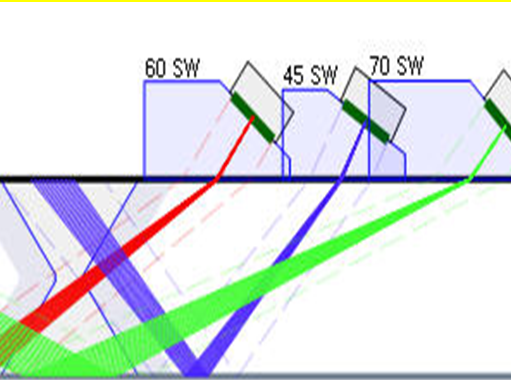 Conventional UT weld inspection
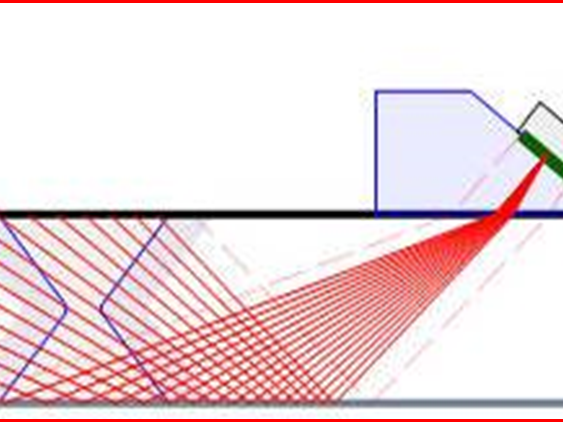 Phased Array weld inspection
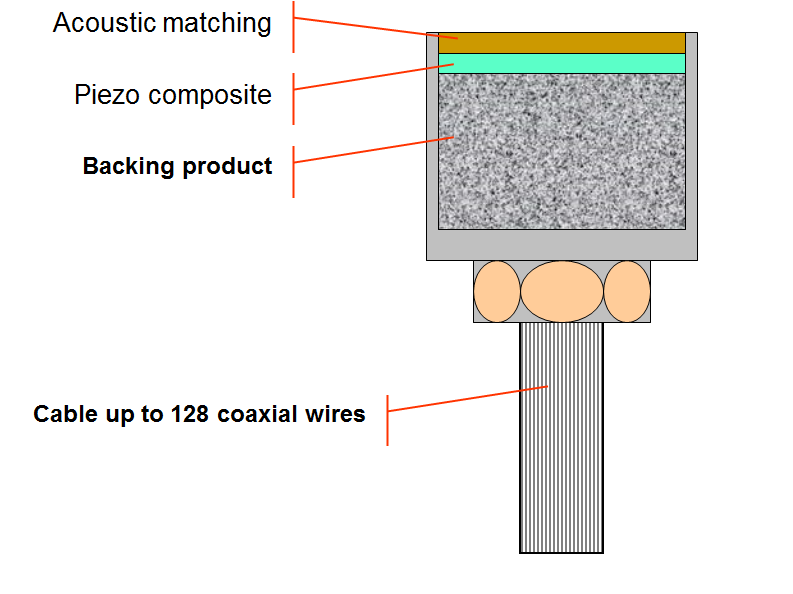 Phased Array Probe structure
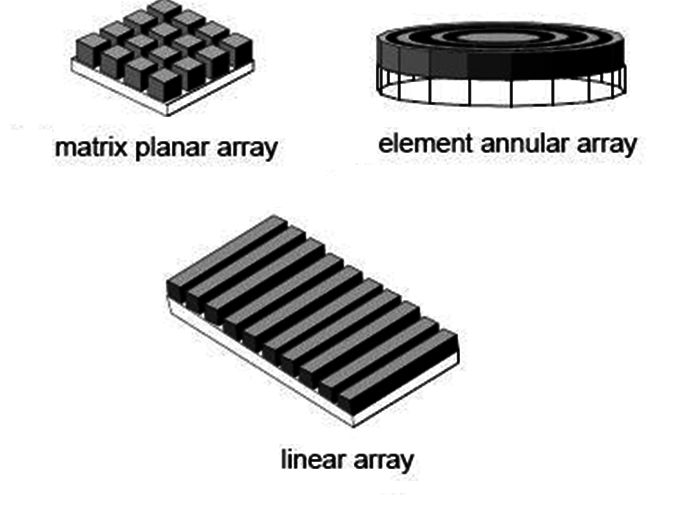 Type of arrays
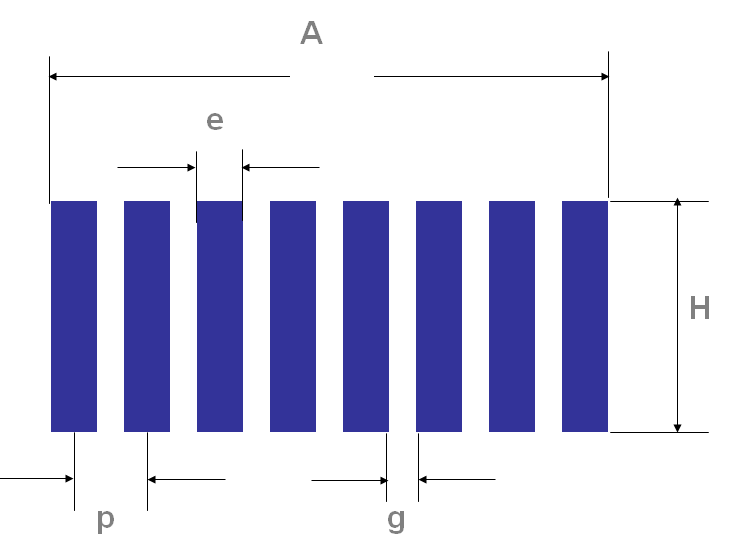 Phased Array probe design parameters
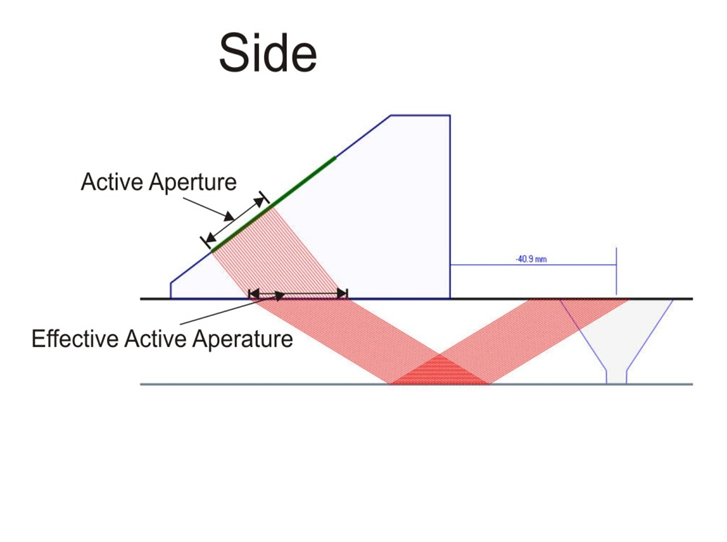 Active and Passive aperture
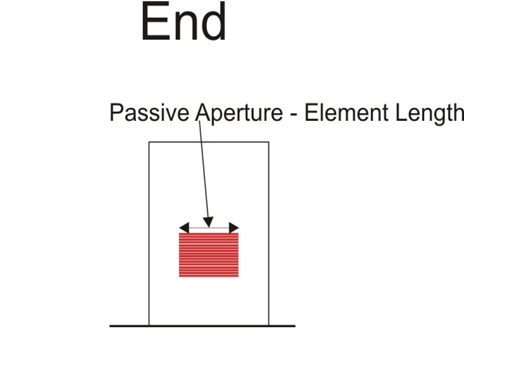 Active and Passive aperture
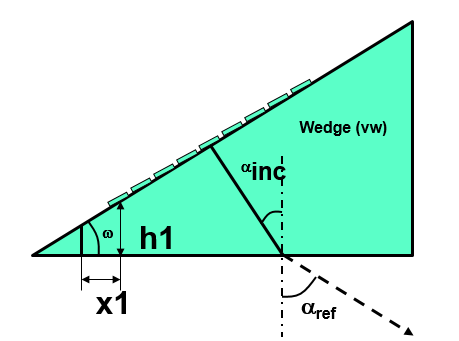 Wedges for Linear Arrays
Diference between conventional UT and Phased Array UT
Conventional ultrasonics utilize a single piezoelectric element. A different probe, wedge, or setup is needed for every
required angle of inspection.
Flaw detection and sizing relies heavily on orientation of flaw and operator manipulation of the probe in manual scanning. With Phased Array UT technology, a single Phased Array probe firing from 40° to 70° can replace the 3 conventional UT probes typically used in a shear wave inspection:
45°, 60° and 70° shear wave angles and all the angles in between.
Please to note that a Phased Array probe cannot steer the beam from -90° to +
90°. The limitation is in the relation between the size of the Phased Array probe elements and the material in which the ultrasoinic waves travel.
Type of Phased Array Probes
The probe construction is similar to a conventional probe.
Multiple piezoelectric elements arranged in patterns in a common housing are called arrays, these are usually:
- Linear;
- Matrix;
- Anular.
PPhased Array Probe Design Parameters
The Phased Array UT probes parameters are the followings:
- Frequency (f);
- Total number of elements in array (n);
- Total aperture in steering or active direction (A);
- Aperture in mechanical or passive direction (H);
- Width of an individual element (e);
- Center-to-center distance between two successive elements (p).
The vibration frequency (f) of each piezo-electric element is determined by its thickness.
Total Number of elements (n) is a compromise between:
- Desired physical coverage of the probe and sensitivity;
- Focusing capability;
- Steering capability;
- Electronic system capability;
- Costs.
Element width (e) is the width of a single element. The general rule is to keep p<0.67•λ; to avoid grating lobes at large steering angles. As (e) decreases:
- Beam steering capability increases;
- The number of elements increases rapidly;
- Manufacturing problems may arise;
- Minimum element size ~0.15-0.20 mm.
The elementary pitch (p) is the distance between the centre of two adjacent
elements.
Element gap (g) or kerf is the width of the acoustic insulation between two adjacent elements. p=e+g.
Active Aperture is the length of the total number of element firing. Effective Active Aperture is the projected aperture seen along the refracted rays where the probe meets part. The passive aperture is the element length or probe width and is also the axis where electronic modifications to the beam cannot be made
Wedges for Linear Phased Array Probes
Transducers and the wedges are separate components. The most used Phased Array probe has liear shape. In this case the Wedge parameters are the
followings:
- Velocity in wedge material (vw);
- Wedge angle (w);
- Height of the first element (h1);
- Offset of the first element (x1).
Transducer design
Transducer design and specifically the size and distribution of the elements in a Linear Array will determine:
- Beam Steering;
- Beam Focusing;
- Size of Aperture;
- Overall cost of the transducer.
Transducer selection becomes a compromise between desired steering, focusing ability and budget.
 Version imprimable